
Verdilab’s Digital Strategy for Navigating the Saturated Beauty Market
In an insightful dialogue, Victoria Neymann outlines the challenges of differentiating in a crowded market, advocating for a strategy…

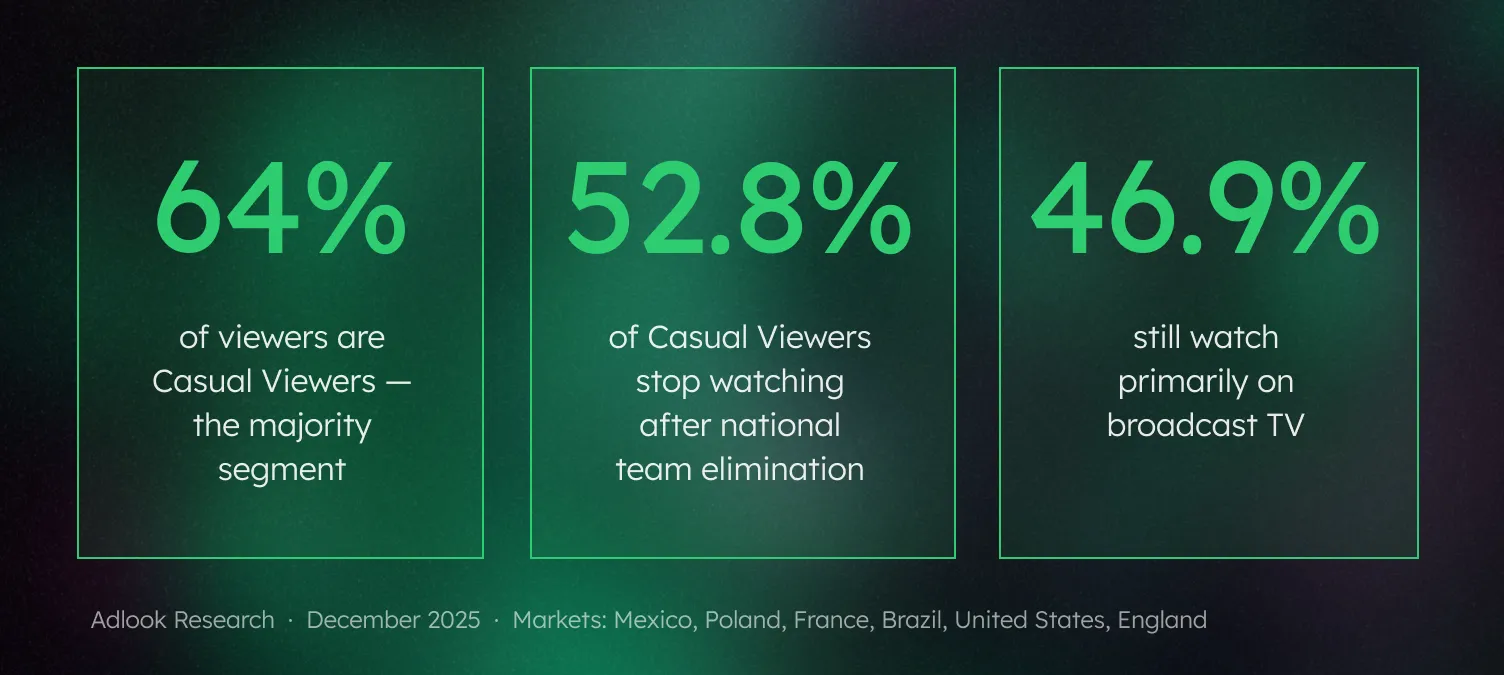
Adlook's research across six markets shows the World Cup audience is not a monolith: 64% are casual viewers whose engagement drops once their national team is eliminated. What it means for brand planning.

Most brands treat the World Cup as a single, sustained media moment. Adlook’s research across six markets suggests the reality is more complex: the majority of tournament viewers are casual fans whose attention is closely tied to the national team, and whose engagement tends to drop sharply once it’s eliminated. Understanding how the audience is structured, and how it shifts, has real implications for how brands plan around the tournament.
At Adlook, we go further: analysing how viewers actually behave during matches, how their attention shifts, and how they engage in real time.
Every four years, the World Cup creates one of the most powerful shared media moments on the planet. For advertisers, the instinct is straightforward: reach as many people as possible, as often as possible, for as long as the tournament runs.
But Adlook’s research across six markets complicates that instinct. The tournament audience is not a monolith. It is made up of two distinct segments – Casual Viewers and Core Fans with meaningfully different behaviors, motivations, and levels of loyalty to the competition itself.
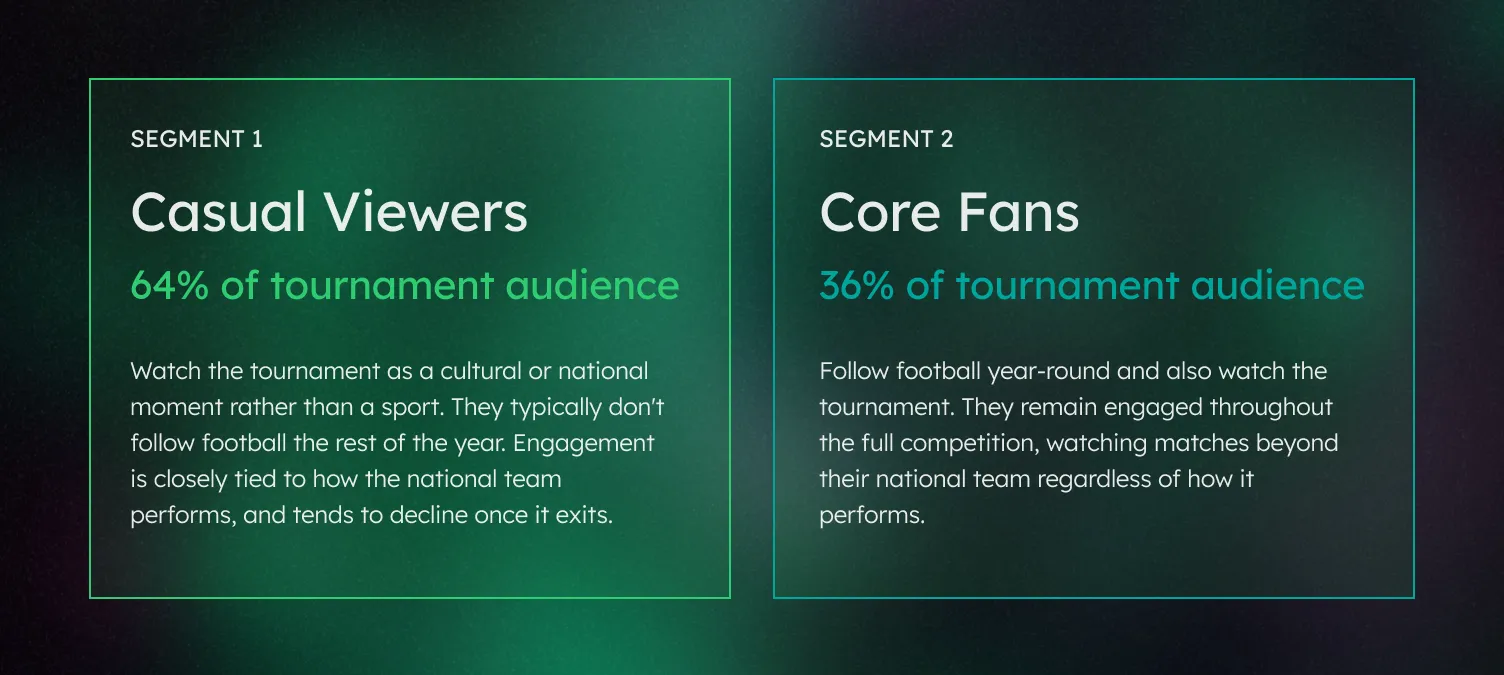
Understanding this split matters because these two groups behave differently in almost every dimension the study measured: what device they use to watch, what they do during matches, and most critically: whether they keep watching once their national team exits.
The most strategically significant finding is what happens at the moment of national team elimination – a milestone that arrives for every country in the tournament, usually within the first few weeks.
Among Casual Viewers, 52.8% say they would stop watching once their national team is knocked out. Among Core Fans, the picture is nearly reversed: 69.7% say they would continue watching regardless of national team outcomes.
The audience that makes the World Cup feel unmissable: the casual majority is also the audience most likely to disengage before the final. Brands planning for a consistent audience throughout the tournament are likely planning for an audience that looks quite different by the later stages.
In practice, this means the tournament audience is at its largest and most diverse during the group stages, then becomes progressively more concentrated among Core Fans as the competition advances. A campaign that performs well in week one may be reaching a substantially different audience profile by the quarterfinals.
Despite the continued growth of streaming, broadcast TV remains the primary viewing method across the six markets studied. That said, a significant share of the audience now watches on digital platforms and many are doing so alongside a second device.
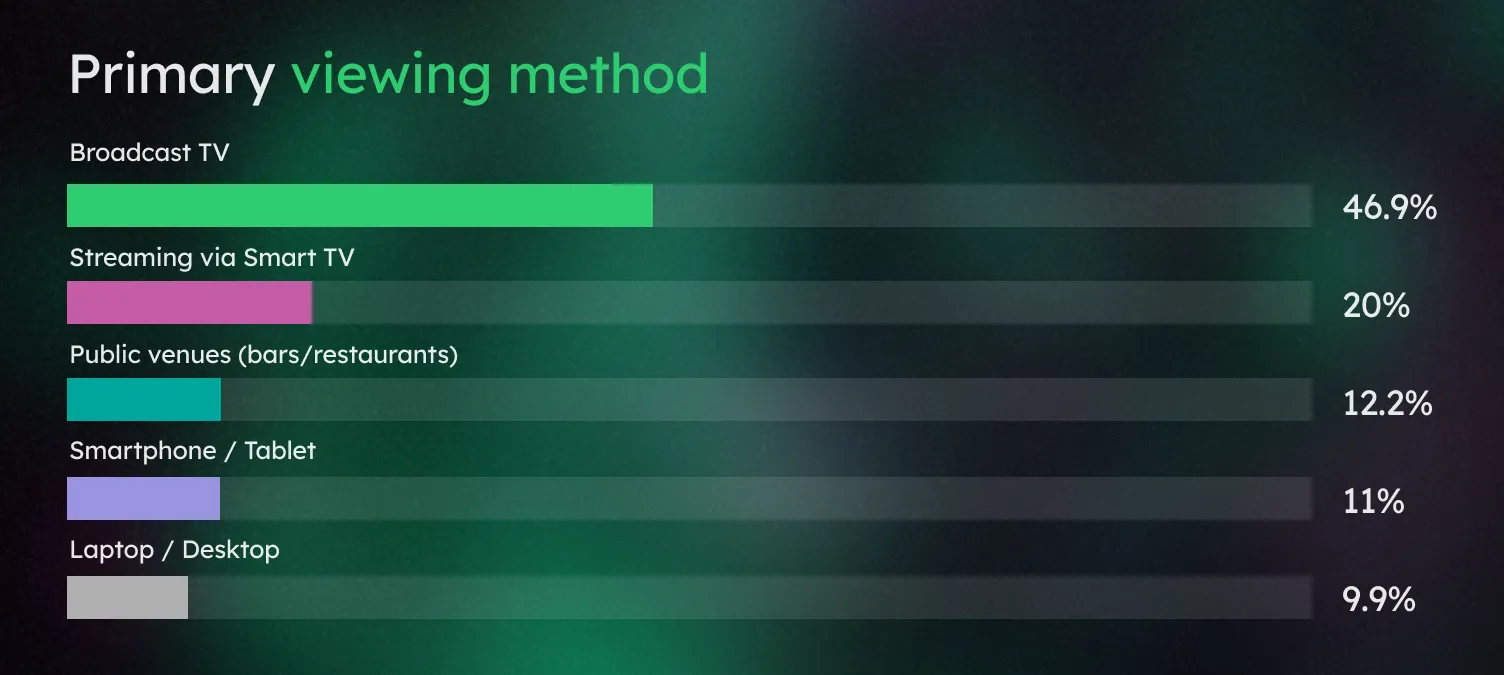
Core Fans over-index on digital: 38% watch via streaming or digital platforms, compared to a lower share among Casual Viewers, who lean toward traditional broadcast. Casual Viewers are also 8% more likely to report giving the broadcast their full, undivided attention, suggesting that for this majority segment, the match itself is the primary focus when they are watching.

Even viewers who are primarily focused on the broadcast often have a second device nearby. The study asked respondents to identify the single most common activity they engage in while watching and the results reveal both the social nature of the event and some interesting commercial signals.
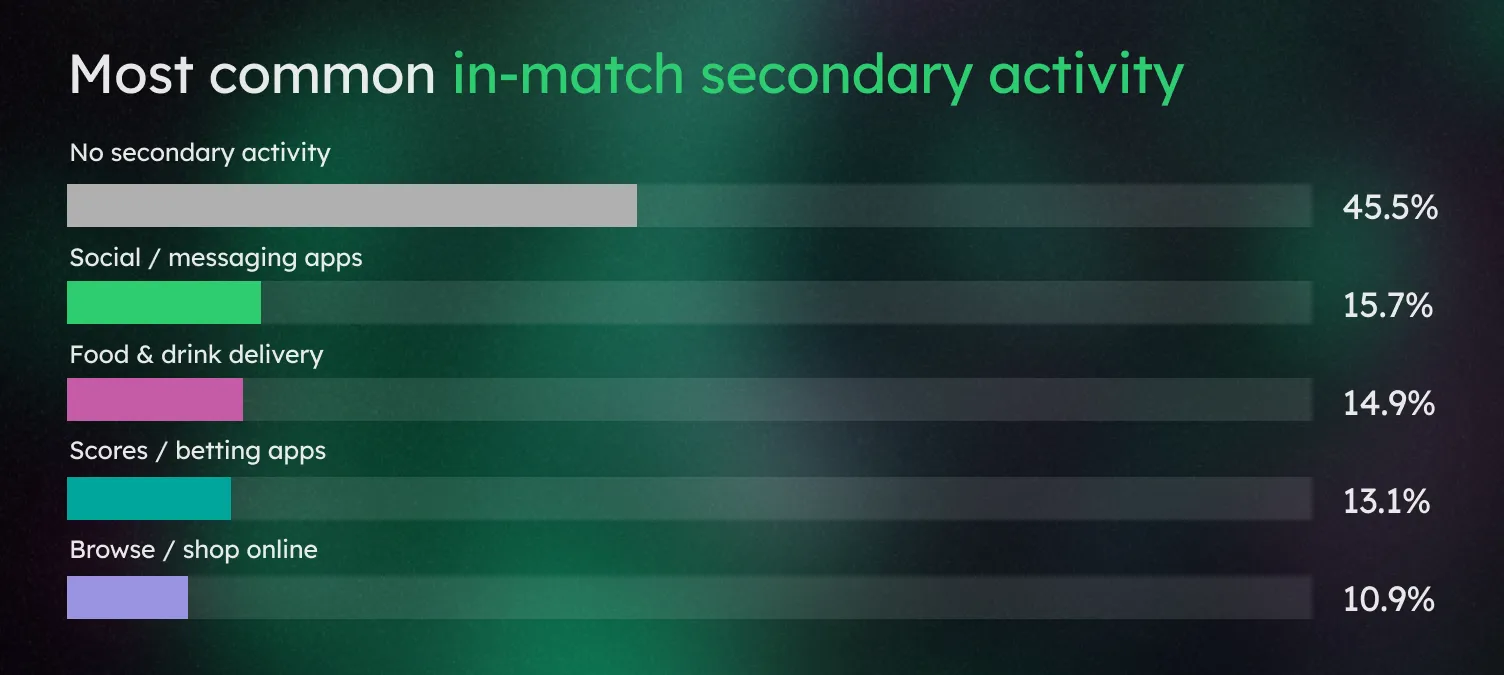
The segment differences here are notable. Casual Viewers are 32% more likely to browse or shop online during matches compared to Core Fans who lean toward sports apps and score-tracking. The high rate of food and drink delivery activity reflects the social, at-home-event character of how most people experience the tournament, and points to real-time purchasing intent that brands in relevant categories can tap into.
The study’s findings point to a few concrete planning considerations for brands thinking about the World Cup:
1. Prioritise the early stages for maximum reach
Because Casual Viewers make up 64% of the tournament audience, the group stages represent the broadest and most diverse audience a brand can reach. For campaigns focused on awareness and reach, the opening weeks of the tournament are likely to deliver the highest impact.
Practically, this means front-loading media weight and ensuring creative is ready well before the knockout rounds. Contrary to common belief, increasing budgets as the tournament progresses does not improve reach or effectiveness. Brands that hold back budget for the final or semi-finals are targeting a significantly smaller, more homogeneous audience and paying a premium for it.
2. Plan for audience composition to shift, not just size to decline
As the tournament progresses, the audience doesn’t just shrink – it changes character. The post-elimination audience skews increasingly toward Core Fans: football enthusiasts who are less likely to browse and shop during matches, more focused on the sport itself, and less commercially reactive to broad consumer messaging.
Brands should consider adapting their creative and targeting strategy as the tournament advances, not just maintaining the same campaign. Messaging that resonates with a casual cultural audience in the group stages may need to shift toward a more football-engaged audience in the later rounds.
This has direct implications for media planning. During matches, brands should prioritise broadcast and second screen environments, where attention is active, and reduce reliance on broad display placements that are less effective in these moments.
3. Use second-screen behaviours as a media opportunity
The high rates of messaging, food delivery ordering, and browsing during matches confirm that tournament viewing is often a social, multi-screen experience. For brands in food, drink, and delivery, the in-match window represents a real-time activation opportunity.
Broadly, cross-screen strategies that connect broadcast exposure with concurrent digital touchpoints are likely to outperform broadcast-only approaches – particularly for reaching Casual Viewers, who are more likely to be active on their phones during the match.
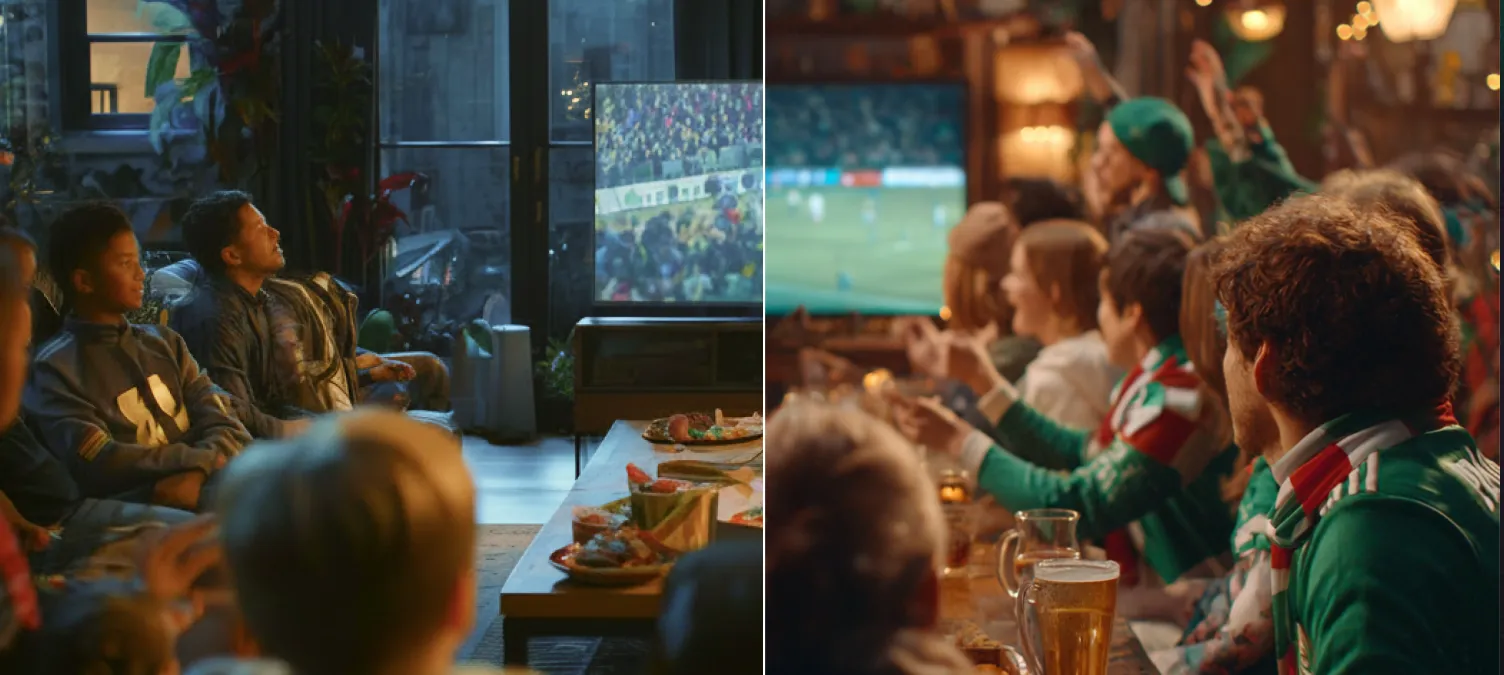
Understanding that the World Cup audience is dynamic is only the first step. The real challenge lies in acting on these changes as they happen.
Traditional campaign setups are typically built around fixed assumptions – predefined audiences, budgets, and messaging planned in advance. But in an environment where audience composition can shift significantly within days, this approach quickly becomes outdated.
When national teams are eliminated, large segments of viewers disappear. Campaigns that are not adjusted in real time risk targeting audiences who are no longer watching, leading to wasted spend and declining effectiveness.
This is where a more adaptive approach becomes critical.
Adlook’s real-time targeting capabilities are designed to respond to these shifts as they happen. By continuously analysing audience behavior and engagement signals, campaigns can dynamically adjust targeting, budget allocation, and messaging in line with how the audience evolves throughout the tournament.
This allows brands to:
In a fast-changing environment like the World Cup, performance is no longer driven by planning alone, but by the ability to adapt while the campaign is live.
The World Cup creates a rare moment of international-scale shared attention but that attention is more concentrated and more time-sensitive than it may appear. The audience is at its largest early in the tournament, it belongs disproportionately to viewers whose engagement is tied to the national team, and it shifts significantly in character as the competition progresses.
For brands, the planning challenge is not just capturing reach at scale – it is aligning campaign timing, creative, and channel strategy with how the audience actually behaves throughout the tournament. The data suggests that the first two to three weeks of the World Cup represent the critical window, and that planning which doesn’t account for post-elimination audience shifts is likely to under-deliver.
Data from the Adlook Global Football Tournament Audience Behavior Study, conducted in December 2025. Markets covered: Mexico, Poland, France, Brazil, United States, England. Respondents were classified as Casual Viewers (do not regularly watch football but watch the tournament) or Core Fans (follow football regularly and also watch the tournament). All results represent self-reported survey data and should be interpreted as directional behavioral insights rather than statistically tested conclusions.