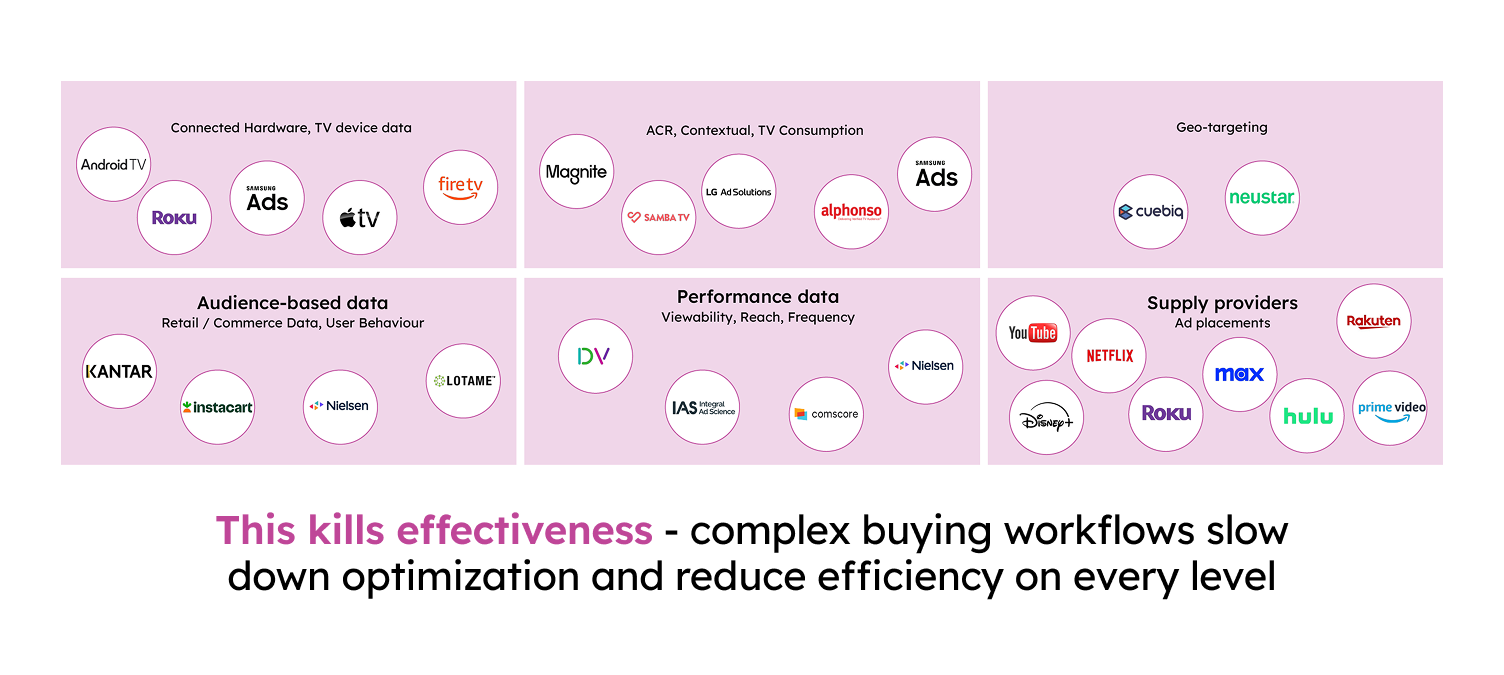
Brands need a unified tech stack – not a patchwork of vendors. Impactful CTV activation shouldn’t require assembling a fragmented stack of publishers, targeting solutions, verification vendors, measurement tools, and creative partners, and then manually reconciling their outputs. The question to ask about your current setup is: do all of these things talk to each other in real time? Managing this in-house is expensive, technically complex, and almost never done well at the brand level. The operational cost and expertise gap is exactly why choosing a single partner that has built around holistic campaign infrastructure – not just sold you access to inventory – is the meaningful decision.
Unified targeting signals – not glued-together packages. The industry is moving in a clear direction on this. In late 2024, IAB Tech Lab released new CTV genre guidance, introducing standardised genres attributes to help buyers accurately read content context across publishers – specifically to avoid misclassification, inefficiency, and targeting failures.9 Genre is a more stable, durable, and privacy-safe targeting signal – because it tells you what someone is watching right now. Reaching a potential Bridgestone prospect while they’re watching an automotive show isn’t a coincidence; it’s timing. And timing – real-time context – is what separates a relevant ad from an intrusive one. Adlook’s research on bid request data shows that across key markets, between 54% and 82% of CTV impressions contain genre data, making it the most consistently available and actionable human signal in the bidstream.10
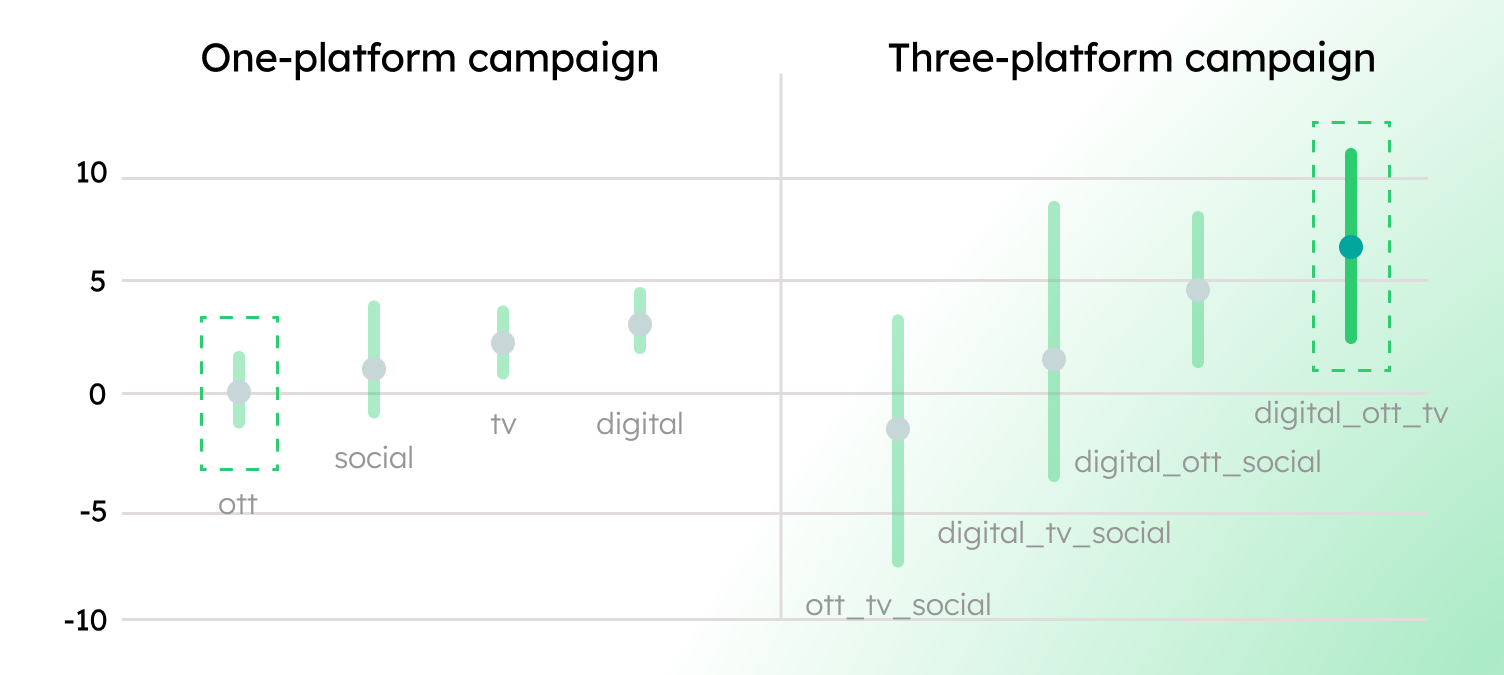
Cross-platform reach, frequency control, and cross-device attribution. These are not measurement luxuries – they are the operational minimum for a channel that reaches multiple platforms, multiple devices, and multiple household members simultaneously. Without deduplicated cross-platform reach, you don’t know your true campaign footprint. Without frequency control, you’re wasting the budget that was supposed to build brand affinity. And without cross-device attribution, CTV sits in your plan as an upper-funnel black box, judged on expensive brand lift studies rather than the business outcomes it’s capable of driving. Adlook’s CTV-to-website attribution data shows that between 1 and 5% of households exposed to a CTV ad visit the advertiser’s website within 14 days11 – a measurable, attributable business signal that changes the conversation from “awareness channel” to “performance contributor.”
Creative that activates the screen. CTV creative is no longer just a 30-second brand spot. It’s a QR code that drives your viewers directly to a product page while they’re still watching. It’s an interactive video where viewers respond to the ad using their remote – selecting options, exploring products, playing with your product – without leaving the viewing experience. It’s genre-tailored executions where you aren’t running the same generic spot, but creatives adapted to the emotional context of the content around it. The big screen became interactive. The question is whether your creatives are built to take advantage of that.
Transparent reporting – not black boxes. If your CTV report doesn’t show you granular delivery insights (e.g. genre, UGC vs professional, series, time, geo heatmap) and full publisher list – you’re not managing a CTV campaign. You’re managing a promise. Impression-level transparency isn’t a premium feature. It’s the baseline for informed optimisation, and it’s the only way to verify that your brand safety standards are being met at the placement level.