The study’s findings point to a few concrete planning considerations for brands thinking about the World Cup:
1. Prioritise the early stages for maximum reach
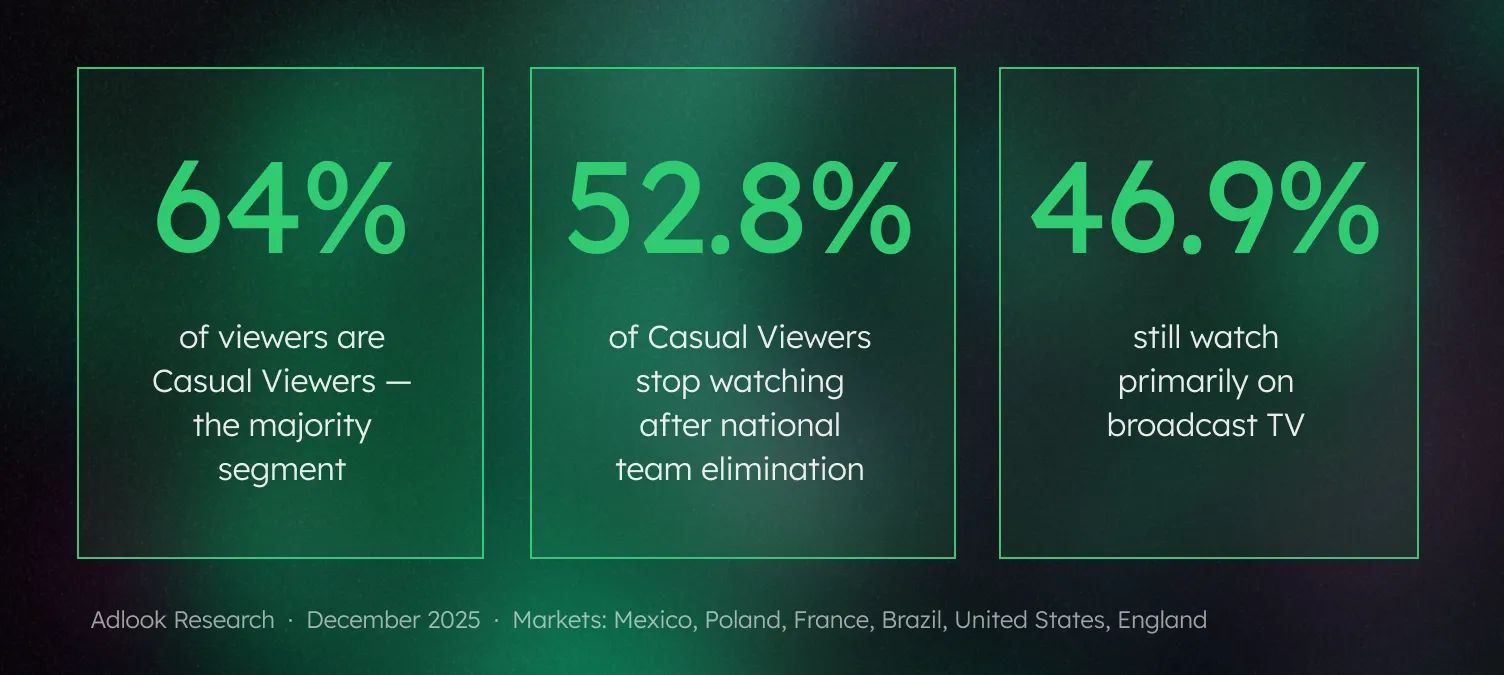
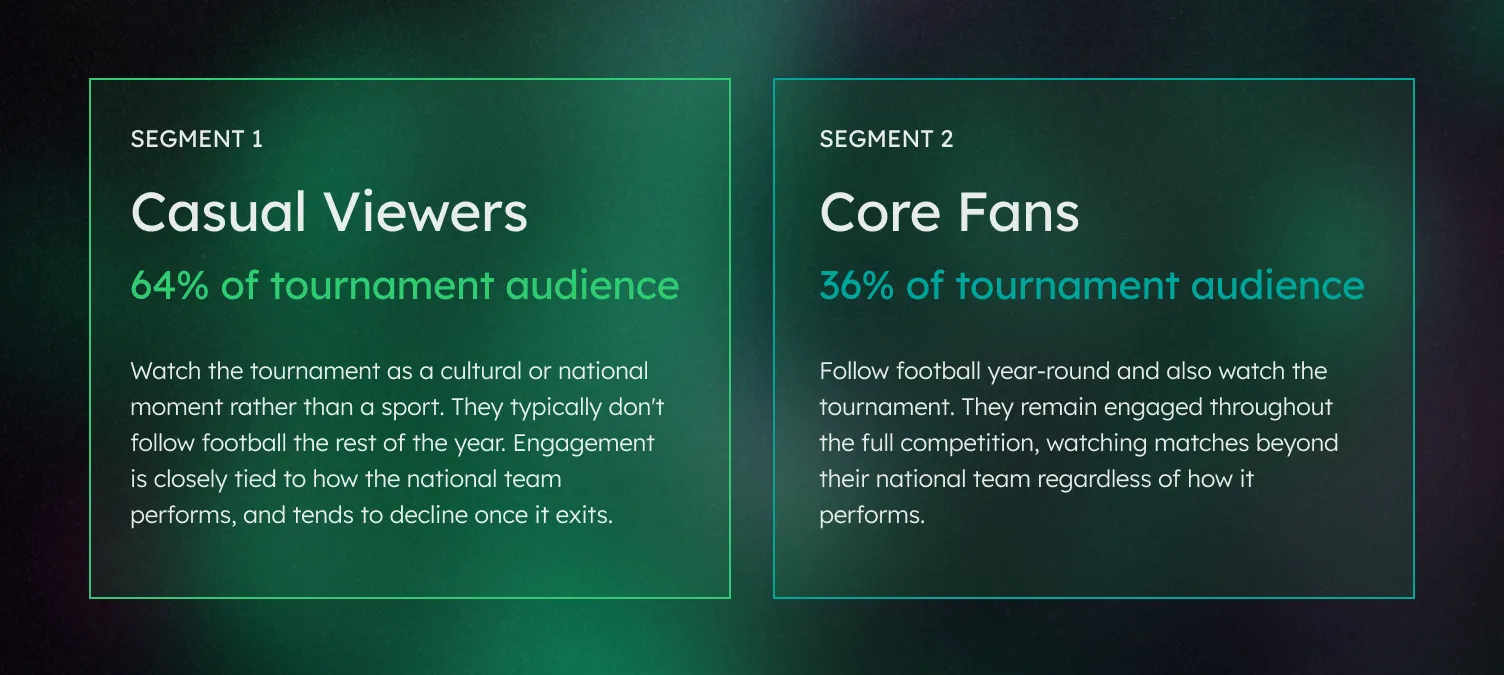
Because Casual Viewers make up 64% of the tournament audience, the group stages represent the broadest and most diverse audience a brand can reach. For campaigns focused on awareness and reach, the opening weeks of the tournament are likely to deliver the highest impact.
Practically, this means front-loading media weight and ensuring creative is ready well before the knockout rounds. Contrary to common belief, increasing budgets as the tournament progresses does not improve reach or effectiveness. Brands that hold back budget for the final or semi-finals are targeting a significantly smaller, more homogeneous audience and paying a premium for it.
2. Plan for audience composition to shift, not just size to decline
As the tournament progresses, the audience doesn’t just shrink – it changes character. The post-elimination audience skews increasingly toward Core Fans: football enthusiasts who are less likely to browse and shop during matches, more focused on the sport itself, and less commercially reactive to broad consumer messaging.
Brands should consider adapting their creative and targeting strategy as the tournament advances, not just maintaining the same campaign. Messaging that resonates with a casual cultural audience in the group stages may need to shift toward a more football-engaged audience in the later rounds.
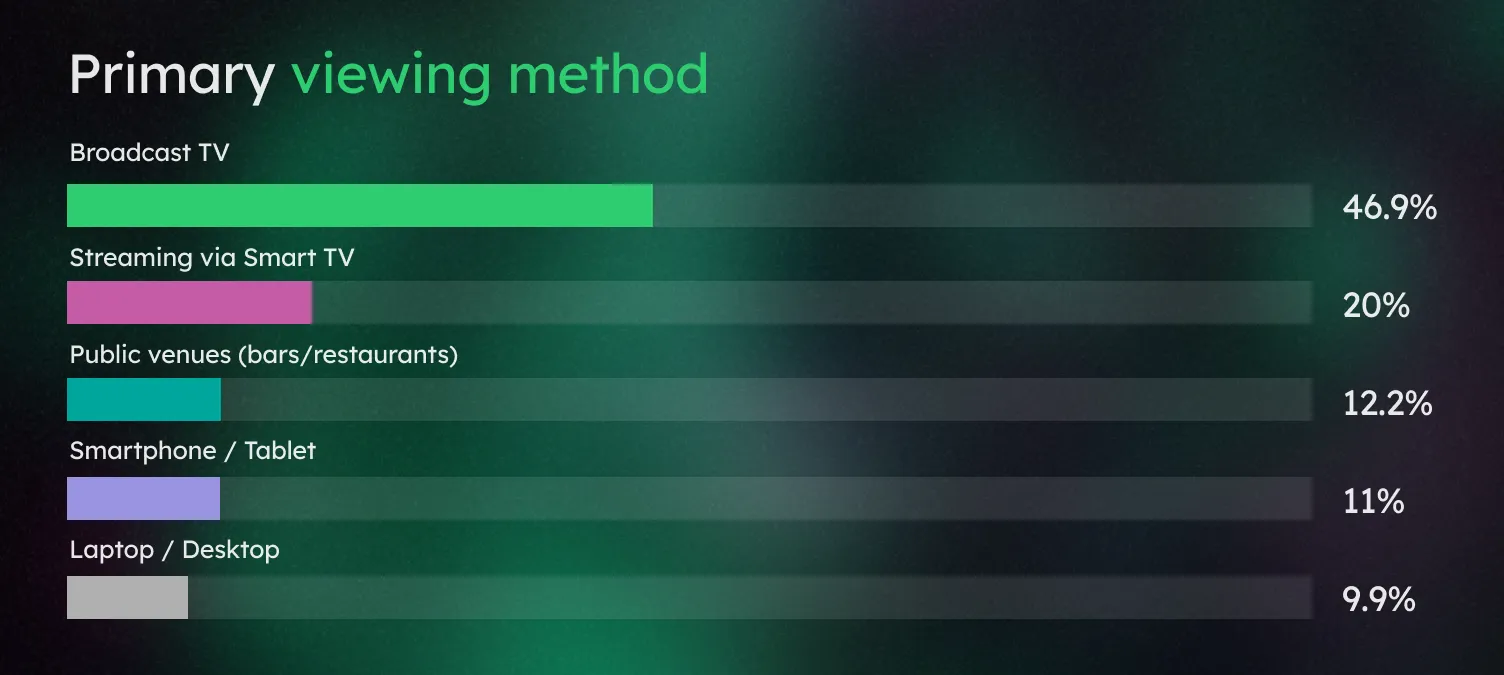
This has direct implications for media planning. During matches, brands should prioritise broadcast and second screen environments, where attention is active, and reduce reliance on broad display placements that are less effective in these moments.
3. Use second-screen behaviours as a media opportunity
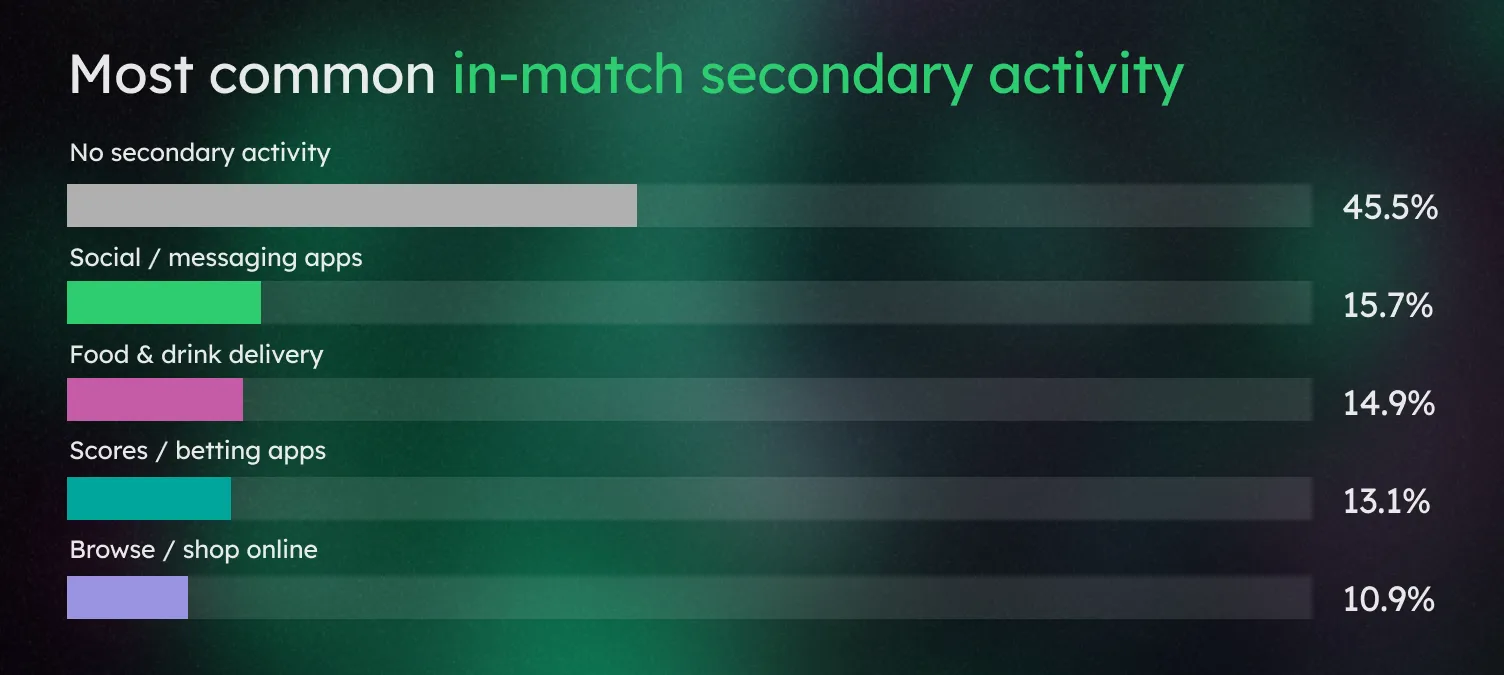
The high rates of messaging, food delivery ordering, and browsing during matches confirm that tournament viewing is often a social, multi-screen experience. For brands in food, drink, and delivery, the in-match window represents a real-time activation opportunity.
Broadly, cross-screen strategies that connect broadcast exposure with concurrent digital touchpoints are likely to outperform broadcast-only approaches – particularly for reaching Casual Viewers, who are more likely to be active on their phones during the match.